
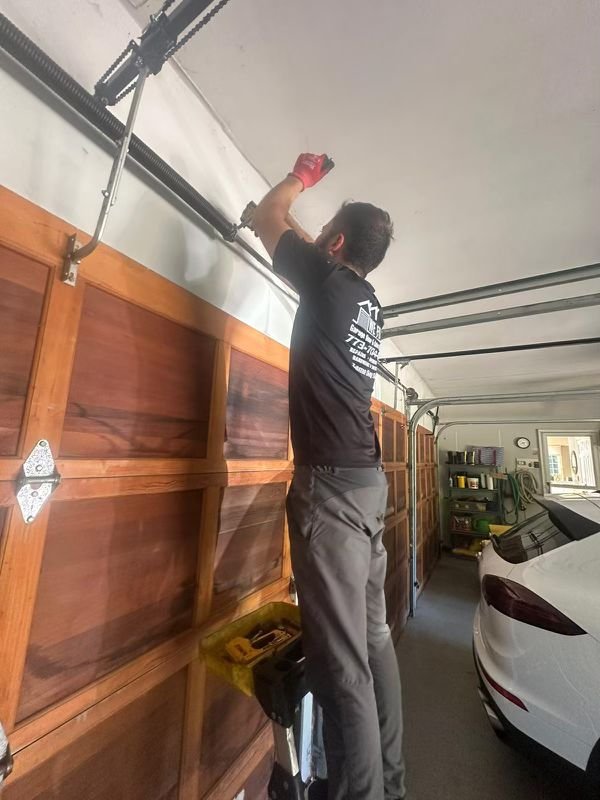
Why the spring system matters
Garage door springs help counterbalance the weight of the door. When the system is working correctly, the door can travel smoothly while the opener guides its movement. A worn, damaged, or broken spring can make the door feel extremely heavy and can place additional strain on the opener and other hardware.
Springs operate under significant tension. Inspection and replacement require the correct tools, parts, and procedures, so homeowners should not loosen, wind, or adjust spring hardware themselves.
Common warning signs
A spring problem is not always identified by a visible break. Changes in the way the door sounds, balances, or moves can also indicate that the system needs professional attention.
- The door will not lift or feels unusually heavy
- The door rises only a few inches and stops
- One side travels higher than the other
- A loud bang came from the garage
- A visible gap appears in a torsion spring
- Cables look loose after the door stops operating
What to do when a spring breaks
Stop operating the door and keep people, pets, and vehicles away from it. Do not pull the emergency release while the door is raised or unstable. A door with a failed counterbalance system can move unexpectedly.
A technician should inspect the spring system, cables, drums, bearings, and door balance before recommending the repair. The correct spring depends on the door's size, weight, construction, and hardware configuration.
Inspection before authorization
Because parts and door conditions vary, an on-site inspection is the right way to determine the scope. Ask for the recommended work and total price before authorizing service. WE FIX IT Garage Door Repair provides service-area appointments throughout Chicago and nearby communities.